Friday, 31 October 2014

Tips for a disability-friendly Halloween


Two girls


Traditionally Halloween is an occasion for children to dress up in colourful costumes, but what extra considerations are there for families with disabled children?
Beyond deciding which houses to trick or treat at and what face to carve into the pumpkin, families with children who have autism, learning disabilities or physical differences have more to consider when it comes to Halloween. But they know from experience how to get around untypical body shapes, the importance of routines, and special diets to make it work and still have fun. Here are some tips for getting the most from the occasion.
Be prepared
This is particularly true for some children on the autism spectrum, for whom routine is all important. Like all other changes to their daily schedule, 31 October has to be anticipated and planned for well in advance. "One way you can do this," says blogger Jane McDowell, "is to have a calendar, and count down the days to Halloween with your child." McDowell writes the Ask-Pergers blog with her son Paddy-Joe, about life on the autism spectrum. If the child likes to know as much as possible about everything, she says, "it can be really helpful for them to learn lots of facts about Halloween such as where it originated from, and why it is still celebrated today."
Explain why people wear costumes
"My children used to be scared of masks and anyone dressed up," says Claire Ryan, who has a son and two daughters on the autistic spectrum. "So we talked to them about dressing up and that the person underneath stayed the same, that it was just how they looked that changed."
The Ambitious about Autism patron says that letting her children dress up at other times of the year in outfits of their choice also helped them to understand the costume concept.
Children with sensory issues can find certain materials and labels scratchy or uncomfortable. The same goes for wigs, masks and face paints. Getting a costume early allows children to get used to how it feels against their skin. Ryan's children sometimes wear pyjamas underneath. Alternatively, say the McDowells, "make a costume from clothes that the child is used to wearing so they feel more comfortable. For example, take old leggings and a T-shirt and tear them to make a zombie costume." If wearing masks is troublesome, they say, "use one on a stick that they can hold in front of their face as and when they want to."

Ebola, ISIS among topics for Parliament


Ebola, ISIS among topics for Parliament
THE twin threats of the deadly Ebola outbreak and militant group Islamic State in Iraq and Syria (ISIS) will be discussed in Parliament when it sits on Monday.
At least three MPs want the Health Ministry to set out how it plans to step up efforts to counter any possible spread of the virus in Singapore.
Dr Chia Shi-Lu (Tanjong Pagar GRC) asked if the ministry would consider imposing a travel ban on the Ebola-stricken countries in West Africa.
Non-Constituency MP Gerald Giam asked whether screening measures at Changi Airport are effective in detecting the virus, given that it has an incubation period of 21 days.
Their questions are prompted by developments in Western nations.
In the first human-to-human transmission of the virus outside Africa, Spanish nurse Teresa Romero Ramos, 44, was infected after she treated a compatriot who had returned from West Africa with the disease. She has since recovered.
In the United States, Dr Craig Spencer of New York City tested positive for Ebola six days after he returned from Guinea. He is in serious but stable condition.
As for ISIS, Mr Alex Yam (Chua Chu Kang GRC) asked whether the Singapore Armed Forces would join the global coalition to combat the terrorist group. The coalition includes the US and several Muslim nations.
Prime Minister Lee Hsien Loong had said last month Singapore is seriously considering how it can be a helpful partner in the fight against ISIS.
Beyond the external threats, the local issues on MPs' minds include the Return Our CPF protest on Sept 27 and the state of the National Stadium pitch.
The protest rally was held at Speakers' Corner in Hong Lim Park, around the same time as a charity carnival in a separate area of the park.
The protesters marched noisily around the carnival area and disrupted it. Six people, including bloggers Han Hui Hui, 23, and Roy Ngerng Yi Ling, 33, were later charged with committing public nuisance acts. They were also charged with organising a demonstration without approval.
The patchy pitch at National Stadium has led Mr Baey Yam Keng (Tampines GRC) to ask, among other things, how its unsatisfactory condition would affect Singapore's international reputation, "given that planned international events have been cancelled or rescheduled".
Taiwanese singer Jay Chou's concert was postponed from next Saturday to Dec 27. Also, a friendly rugby match between the Maori All Blacks and the Asia Pacific Dragons, scheduled for Nov 15, was cancelled.
During the sitting, one Bill will be introduced to amend the Industrial Relations Act. It seeks to let rank-and-file unions represent professionals, managers and executives, a move lobbied for by the National Trades Union Congress.
Ten Bills, however, will be debated, including two Private Member's Bills introduced last month by backbenchers to change the laws on cruelty to animals and human trafficking.
Ms Irene Ng (Tampines GRC) will seek an adjournment motion to let her speak for up to 20 minutes on an issue close to her heart - cycling.
She will argue why Singapore needs to develop a national integrated cycling strategy and policy framework.
She told The Straits Times yesterday there is growing recognition of the benefits of cycling, but it still suffers from an image problem.

Android 5.0 Lollipop: When Google's next OS will arrive on your phone


Find out when your phone will be getting an Android 5.0 Lollipop upgrade

Google's always struggled to keep pace with key competitor Apple when it comes to pushing software updates out to its customers. This is mainly due to the firm's open management policy with Android.
The policy lets developers and handset makers make changes to Android without Google's permission. On the one hand this is great as it means app makers can bring their products to market faster and handset makers can add custom, exclusive software features to their handsets.
The flipside of this is that the additions delay how quickly the phones can receive future Android updates from Google as the custom code has to be reworked to be compatible with the new OS version.
As a result, many smartphone buyers have been left wondering when and if their handset will be upgraded to Google's soon to be released Android 5.0 Lollipop operating system. Here to help we've created a comprehensive list of all the smartphones currently confirmed to get an Android 5.0 Lollipop upgrade.
LG
The LG G3, as we noted in our full review, is one of the best smartphones to come out this year. Featuring an atypical design that places the phone's power and volume keys on its back, powerful processor and ultra crisp 5.5in display that breaks the 500ppi count the G3 already has plenty of perks.

Because of this we're delighted LG has promised to upgrade the G3 to Android 5.0 Lollipopbefore Christmas.
Motorola
For the past few years Motorola has been doing a great job loading its handsets with untouched, or close to untouched, versions of Android. As as result it's unsurprising that Motorola was among the first to confirm that a number of its smartphones will get Android 5.0 Lollipop upgrades.

Specifically, Motorola confirmed that in the UK the first- and second-generation Moto X, Moto G, Moto G with 4G LTE and Moto E will get Android 5.0 Lollipop upgrades. Over in the US, Motorola's Droid Ultra, Droid Maxx and Droid Mini are also confirmed to get the upgrade.
Motorola has not given an exact date for the update, but has promised it will be very soon after the official Lollipop launch.
Sony
Japanese tech giant Sony confirmed that its entire range of Xperia Z series smartphones and tablets will receive an upgrade to Android 5.0 Lollipop at an unspecified point in the future.

"We'll be making Sony Mobile's Android [Lollipop] upgrade available for the entire premium Z series," wrote Sony in a blog post.
"We'll start the upgrade at the beginning of 2015 for the core Xperia Z3 and Xperia Z2 series, continuing thereafter for all remaining devices above."
This means that eventually the Xperia Z, Xperia ZL, Xperia ZR, Xperia Tablet Z, Xperia Z1, Xperia Z1S, Xperia Z Ultra, Xperia Z1 Compact, Xperia Z2, Xperia Z2 Tablet, Xperia Z3, Xperia Z3v, Xperia Z3 Compact and Xperia Z3 Tablet Compact will be upgraded to Android 5.0 Lollipop

Co-creator of Android mobile software leaves Google


mobile software news


Google on Thursday confirmed that an executive behind leading mobile device software Android is leaving the company to create an incubator for hardware startups.

Andy Rubin became a Google executive in 2005 when the Internet titan bought Android Inc., which was then a small startup that Rubin co-founded two years earlier.

Rubin led the Android team at Google until last year, by which time Android was the most widely used smartphone operating system in the world.

Rubin switched to managing the robotics team at Google.

"I want to wish Andy all the best with what's next," Google chief executive Larry Page said in a statement emailed to AFP.

"With Android he created something truly remarkable—with a billion plus happy users. Thank you."

Coming Out in Businessweek, Tim Cook Chooses to Play It Low-Key


How exactly does the chief executive of the most valuable company in the world announce that he is proud to be gay?
Write a corporate blog post? Sit down for a TV interview? Invite tech journalists for a very special announcement?
Tim Cook, the chief executive of Apple, chose to write a sober, conscientiousessay for Bloomberg Businessweek that invoked the Rev. Dr. Martin Luther King Jr. and used the word “privacy” again and again. The headline did not address the news head on — “Tim Cook Speaks Up.”
“The back story on it is pretty simple,” Businessweek’s editor, Josh Tyrangiel, said in an interview on Bloomberg TV. “He called and asked” if they could meet in California. Mr. Tyrangiel said that the essay, which appeared on the Businessweek website Thursday morning, was “not precipitated by any event, it’s not a reaction to anything,” but was something “he has been thinking about for a while.”
The headline on Bloomberg terminals, at 7 a.m. New York time, put the news directly: “APPLE CEO TIM COOK SAYS ‘I’M PROUD TO BE GAY.’ ”
Businessweek and Mr. Cook have forged what seems to be a close relationship. Mr. Cook was on the cover in September for an article about how he was putting his own stamp on Apple three years after its co-founder Steve Jobs’s death; the piece didn’t delve into Mr. Cook’s private life other than to say that he could become “quite emotional about a range of subjects close to his heart, from Auburn University football to social justice.” In addition to the September feature, the magazine ran a cover piece on Mr. Cook and Apple last year.
For the latest article, a Bloomberg spokeswoman said, Mr. Cook and Mr. Tyrangiel agreed that Mr. Cook should not be on the cover.
Businessweek’s relationship with Mr. Cook calls to mind the connection Time magazine had with Mr. Jobs, who appeared on numerous Time covers. Walter Isaacson, the former Time editor, went on to write a best-selling authorized biography of Mr. Jobs. (Mr. Tyrangiel worked at Time for 10 years before taking the top job at Businessweek.)
Mr. Cook’s low-key approach is different from the way leaders in other fields have announced they are gay. The N.B.A. player Jason Collins was on the cover of Sports Illustrated in May with the headline “The Gay Athlete.”
Ellen DeGeneres, who was among the first to use a magazine to announce that she was gay, was on Time’s cover in 1997 next to the words “Yep, I’m Gay.”
The “buttoned-up and business-focused” approach of Mr. Cook in a forum like Businessweek makes sense for what he is trying to achieve, said Brian Ellner, head of public affairs at the Edelman public relations firm who was senior strategist for the Human Rights Campaign’s successful effort to win marriage equality in New York in 2011.
“It was intentional and well thought out and intended to send a signal and communicate with other C.E.O.s and other business leaders,” Mr. Ellner said, much the way Mr. Collins or the football player Michael Sam went to sports outlets with their stories to be sure to reach other athletes and sports fans.
Like Mr. Collins, Mr. Cook emphasized how irrelevant his sexuality was to his job. Mr. Collins noted how tough he is as an N.B.A. center, pointing out that he “once fouled a player so hard that he had to leave the arena on a stretcher.”
For his part, Mr. Cook wrote reassuringly to his audience: “I’ve made Apple my life’s work, and I will continue to spend virtually all of my waking time focused on being the best C.E.O. I can be.”

Samsung's Gear S smartwatch coming to the US on November 7th


Samsung's Gear S smartwatch coming to the US on November 7th


Samsung's Gear S smartwatch will launch in the United States on November 7th, the company announced today. All four major US carriers (Verizon, AT&T, Sprint, and T-Mobile) will carry the device, and you'll also be able to purchase it from Samsung's store-in-a-store shops at Best Buy locations across the US. The Gear S will be available in black or white, but Samsung's not revealing any pricing details; it's leaving that task to the carriers. Just don't expect the Gear S, with its built-in cellular radio and curved OLED screen, to come cheap.
T-Mobile has announced that it'll retail for $349.92 at full cost. For reference, that's $100 more than a Moto 360. Sprint's charging even more, pricing the Tizen-based smartwatch at $384. Both carriers are pushing their monthly financing programs, which will allow customers to purchase Gear S for $0 down and pay it off over the course of 24 months. AT&T and Verizon are likely to offer similar options since asking people to pay over $300 out of pocket for this might be a hard sell.
With its integrated cellular connectivity, the Gear S is a much more independent smartwatch compared with what's currently on the market. It doesn't need to rely on your phone to pull down social media updates or email notifications. You can even make phone calls from the watch, though it won't use the same number as your regular smartphone. Some carriers are offering special plans for Gear S; T-Mobile's got a $5-per-month plan for "unlimited data and texting with up to 500 MB of data." And through December, Sprint will wave the $10 fee normally required to add Gear S to your family plan — so long as you're paying for at least 20GB of shared data. The Gear S is one of Samsung's best watches to this point, though it's still just big on many wrists. And more competition, including the Apple Watch, is fast approaching.

Lenovo completes £1.82bn acquisition of Motorola Mobility


Lenovo completes £1.82bn acquisition of Motorola Mobility

Motorola brand to remain and operate as wholly-owned subsidiary; Lenovo becomes third largest global smartphone player and sets sights on Apple and Samsung; expects sales of 100 million this year 
Lenovo has completed the £1.82 billion acquisition of Motorola Mobility from Google.
It follows clearance from competition authorities in the US, China, EU, Brazil and Mexico, as well as the Committee on Foreign Investment in the US (CFIUS).
Lenovo will operate Motorola as a wholly-owned subsidiary, with the latter’s headquarters remaining in Chicago. It will also welcome nearly 3,500 global Motorola employees – including 2,800 in the US – who design, engineer, sell and support the manufacturer’s devices.
Google will maintain ownership of a majority of the Motorola patent portfolio, while Motorola will receive a license to this and other intellectual property.
The handset manufacturer will also retain over 2,000 patent assets and a large number of patent cross-license agreements, as well as the Motorola Mobility brand and trademark portfolio.
The deal was originally announced on January 30, 2014, with the £1.82 billion fee representing a near £6 billion loss for Google, which had paid £7.54 billion for the handset business from Motorola in 2011.
According to preliminary global smartphone sales figures for Q3 released by analyst firm IDC yesterday (October 29), Xiaomi was the third largest smartphone vendor with 17.3 million shipments and market share of 5.3 per cent.
Lenovo was just behind in fourth, with 16.9 million shipments and market share of 5.2 per cent. The acquisition of Motorola will likely take it above Xiaomi into third position. IDC didn’t list Motorola’s unit shipments or market share as it didn’t feature in the top five manufacturers.
Lenovo chairman and CEO Yang Yuanqing said: “Today we achieved a historic milestone for Lenovo and for Motorola – and together we are ready to compete, grow and win in the global smartphone market. By building a strong number three and a credible challenger to the top two in smartphones, we will give the market something it has needed: choice, competition and a new spark of innovation.
“This partnership has always been a perfect fit.  Lenovo has a clear strategy, great global scale, and proven operational excellence.  Motorola brings a strong presence in the U.S. and other mature markets, great carrier relationships, an iconic brand, a strong IP portfolio and an incredibly talented team.  This is a winning combination.”
Lenovo executive vice president and president of its Mobile Business Group Liu Jun is now chairman of the Motorola Management Board, while Rick Osterloh will remain president and chief operating officer of Motorola.
“Motorola has already built solid momentum in the market, and their recent results show consumers are excited about their exceptional products that stand out for their design and simplicity,” said Jun.
“With the complementary strengths of our two companies, we expect to sell more than 100 million mobile devices this year – including smartphones and tablets – by leveraging the Lenovo brand’s leading market position in China, our shared momentum in emerging markets, and Motorola’s strong foothold in mature markets like the U.S.”

Samsung planning smartphone overhaul after 60pc profit slump


Samsung planning smartphone overhaul after 60pc profit slump


Manufacturer to focus more on the mid-to-low range market after admitting that high-end smartphone sales in Q3 were “somewhat weak”
Samsung is to revamp its smartphone strategy to focus more on the mid-to-low-end segment following a 60 per cent slump in profits in Q3.
During an earnings conference call with analysts, the Korean manufacturer revealed third quarter profits had fallen to Won4.1 trillion (£2.4 billion), its lowest in more than three years. This was in line with guidance provided earlier this month.
Operating income from its mobile business, which had contributed more than half of its total earnings, decreased from Won6.7 trillion (£4 billion) from a year earlier to Won1.75 trillion (£1 billion). Quarterly sales fell 20 per cent to Won47.4 trillion (£28.1 billion).
Samsung senior vice president Kim Hyun-joon admitted sales of its high-end smartphones, which includes its flagship Galaxy S5 (pictured), were disappointing, and that an overhaul of its strategy would see it concentrate more on the mid-to-low end sector.
“Our high-end smartphone result was somewhat weak,” he said. “We will fundamentally reform our product portfolio.
“The mid-to-low end market is growing rapidly, and we plan to respond actively in order to capitalise on that growth.”
According to the latest figures from analyst firm Strategy Analytics, Samsung’s global market share fell to 24.7 per cent in Q3 from 35 per cent a year ago. It shipped 79.2 million smartphones in the quarter, down from 88.4 million in the same three-month period 12 months ago.

Can never forget Sardar Vallabhbhai Patel's role in uniting India: Narendra Modi

"Through his skill, vision and patriotism, he integrated the nation," Modi said while addressing the nation on his birth anniversary.


NEW DELHI: The country can never forget Sardar Vallabhbhai Patel's contribution in uniting the country, Prime Minister Narendra Modi said here Friday. 

"The British wanted India to break into pieces but Sardar Patel unified the 550 provinces into one country," Modi said while addressing the nation on the birth anniversary of Sardar Patel being observed as 'Rashtriya Ekta Diwas'. 

"Through his skill, vision and patriotism Sardar Patel integrated the nation. We can never forget his contribution in uniting free India," Modi added. 

A 'Run for Unity' and pledge taking at Vijay Chowk marked India's first home minister's birth anniversary October 31 

League Cup draw: Liverpool handed trip to Bournemouth, Chelsea to face Derby and Newcastle United up against Tottenham


Rolando Aarons celebrates after scoring the opening goal during Newcastle's 2-0 win at Manchester City

Newcastle were rewarded with a trip to Tottenham after dumping out Premier League champions Manchester City on Wednesday night - but Bournemouth nicked the tie of the round. 
Alan Pardew's side found themselves in the quarter-final hat after Rolando Aarons and Moussa Sissoko's goals either side of half-time stunned City. 
And they will travel to north London - the scene of their Premier League win on Sunday. Eddie Howe's Bournemouth have a glamorous tie to look forward to as Liverpool travel to the south coast. 


The pair are familiarly foes having faced off in last year's FA Cup, while Derby - who thrashed Fulham at Craven Cottage on Tuesday - will welcome Chelsea to the Midlands. 
Steve McClaren's Rams top the second tier with many tipping them for promotion to the Premier League this season.  
Meanwhile, the Graziano Pelle-inspired Southampton - off the back of their last-gasp win at Stoke - will travel to Bramall Lane to play League One Sheffield United.
The ties will take place the week commencing December 15.  


Sarah Payne's father Michael found dead at Kent home


Sarah PayneMichael Payne in 2011


The father of murdered schoolgirl Sarah Payne has been found dead at his home in Kent.
Michael Payne, 45, was discovered at his home in Brishing Lane, Maidstone, on Monday night.
Kent Police have not identified the occupant of the property but said the death was not suspicious.
Mr Payne's eight-year-old daughter was abducted and killed by convicted paedophile Roy Whiting in West Sussex in 2000.

Start Quote

All he ever wanted to do was to see his daughter again”
Martyn Underhill
His daughter Charlotte posted a picture of her father on Facebook alongside a message saying she was "heartbroken".
"No matter what happened and how many mistakes we all made you will always be my daddy," she wrote.
She later added: "I'm sorry I couldn't save you dad. I hope you have finally found your peace and happiness."
AnalysisDuncan Kennedy, news correspondent
Michael Payne was a father crushed by agony. A parent consumed by grief.
When his eight-year-old daughter Sarah was abducted in July 2000 his world collapsed.
She was found dead in West Sussex 17 days later, murdered by Roy Whiting - a paedophile now serving life in jail - but it was a term that gave Michael only temporary escape from his demons.
With his wife Sara, Michael found brief solace and purpose in campaigning for Sarah's Law, giving people greater information about sex offenders, but he began drinking heavily and the marriage collapsed.
He later said he had failed to protect his own daughter.
He had tried to come to terms with his suffocating loss, but in the end he was consumed.
line
Her brother Lee wrote: "Dad, you had your demons and troubles but you had a good heart and was a decent man! I hope now you have found peace at last! RIP, you will be missed. We are all heartbroken."
Ex-senior detective Martyn Underhill, who was the deputy senior investigating officer during Sussex Police's Sarah Payne inquiry, said Mr Payne could "walk with Sarah now".
Mr Underhill, now the police and crime commissioner for Dorset, said: "I was honoured to have known him. He battled his demons.
"But all he ever wanted to do was to see his daughter again. When Sarah went, it destroyed Michael as well."
'Painful time'
Mr Payne split from his wife Sara in 2003 after 18 years together, blaming the difficulties of coping with the loss of their daughter.
In December 2011, he was jailed for 16 months after admitting attacking his brother with a glass after they had both drunk a large amount of alcohol.
The court heard how he had developed a drink problem after the murder of his daughter by Whiting.
In a message on Twitter, Mrs Payne thanked her 3,800-plus followers for their kindness and understanding.
Fellow child protection campaigner Shy Keenan, a close friend of Mrs Payne, tweeted: "Sara thanks you all (more than she can say right now) for your love, kindness and understanding at this very painful time in their lives."
And she wrote: "Sara wants to be left alone to care for her grief-stricken family and respectfully requests that the media leave her and her children alone."
Whiting was convicted in 2001 of the abduction and murder of Sarah and sentenced to life imprisonment.
Sarah, who lived in Hersham, Surrey, disappeared from a cornfield near the home of her paternal grandparents, Terence and Lesley Payne.
Her body was found on 17 July in a field near Pulborough, some 15 miles from Kingston Gorse in West Sussex where she had disappeared.

Saints down Panthers, end seven-game road losing streak


CHARLOTTE, N.C. -- The Saints' offense is potent enough with Drew Brees.
But if they continue to get big games on the ground from Mark Ingram, they may just leave the rest of the weak NFC South in the dust.
Brees threw for 297 yards and a touchdown and also ran for another score, and Ingram turned in another strong performance, carrying 30 times for 100 yards and two TDs as New Orleans defeated the Carolina Panthers 28-10 Thursday night to take over first place in the NFC South.
Brees praised Ingram, who was coming off 172 yards rushing last week against Green Bay, for "carrying the load" and being the catalyst for the Saints' recent turnaround the past two weeks.
"Man, it's when our offense is at its best," Brees said of the Saints' running game.
The Saints (4-4) piled up 375 yards to snap a seven-game losing streak on the road that dated back to last November.
Brees said too much is made of the team's road woes, but he knows it wasn't going away until the Saints could find a way to win a big game on the road.
Brees finished 24 of 34 and tight end Jimmy Graham had seven catches for 83 yards and a touchdown.
But it was Ingram who kept the Panthers off balance by picking up key first downs.
"The offensive line and tight end did a great job of hitting them, hitting them and hitting them," Ingram said. "I think they started to wear down and we were able to get some leaky yards and some big gains."
The struggling defending NFC South champion Panthers (3-5-1) have only won once in their past seven games after opening the season with back-to-back wins. They have 10 days before their next game to figure out how to turn things around.
"We know we are better -- simple as that," Panthers quarterback Cam Newton said. "It's nothing that someone has to say that hasn't already been said. It's a lot that hasn't been done yet."
Brees said he didn't let the team's road struggles creep into his mind, even after he threw an interception and fumbled in the first quarter.
He settled down late in the second, leading touchdown drives on four of the next five possessions.
The Saints' defense did its part, sacking Newton four times and forcing two turnovers. Newton, who spent much of the night under heavy duress playing behind an offensive line without three of its regular starters, was limited to 151 yards passing.
Carolina had opportunities to seize momentum after New Orleans' first two turnovers, but couldn't capitalize.
That's nothing new. The Panthers had three trips in the red zone last week against Seattle, but came away with only six points.
"It's hard when you don't take advantage of those opportunities," Panthers coach Ron Rivera said.
The Saints didn't have the same problem converting turnovers into points.
With the Panthers pinned back in their own end in a scoreless game, Junior Galette sacked Newton from behind and stripped the ball, allowing linebacker Curtis Lofton to recover at the Carolina 3. Ingram took advantage two plays later with a 3-yard run to give the Saints a 7-0 lead
After forcing a three-and-out, Brees directed an 85-yard drive that ended when he slipped a 1-yard pass just past Melvin White to Graham on the right side with 3 seconds left in the half and the Saints were off and running while the Panthers headed to the locker room serenaded by a chorus of boos.
Brees scored on a quarterback sneak when he dove over the pile in the third quarter and Ingram sealed the win with his second TD run in the fourth quarter.
Brees said he had the option of calling a timeout before his fourth-and-goal run at the Carolina 1, but decided to take a shot and leaped over the pile with the ball extended to score.
"Drew felt with their linebackers' depth, he'd be able to get the half yard -- and he did," Saints coach Sean Payton said.
One of the few highlights for the Panthers came from Newton.
He turned in one of the most athletic plays of the season when he scrambled out of the pocket, raced around the left end and took off from the 5-yard line and soared toward the goal line with the ball outstretched in his right hand for a touchdown, cutting the Saints lead to 14-7.
While Newton struggled, his receivers didn't give him much help.
Jerricho Cotchery couldn't haul in a catchable deep ball inside the 10 in the first quarter and Newton's on-target throw hit Brenton Bersin in the hands and popped straight to Corey White for an interception on the next drive. Rookie Kelvin Benjamin also dropped a pass in the end zone for the second straight week.
"We knew we had a chance to take control of the division," Ingram said. "We lost to them here at the end of last year so we felt like we left something here. We had to come back and take care of business."

Halloween: the science of cashing in


ghost childghostchildhalloweenpartyholiday

Halloween is increasingly popular, so you can expect to see countless articles, adverts, TV shows, product offers and more all themed around it, even if the association is extremely tenuous. Why does this happen? And isn’t this article just another blatant example of it? Yes, yes it is.
It’s Halloween again. It feels like it’s only been a year since this blog last clumsily tried to combine science and Halloween in a desperate bid to gain extra traffic from the fleeting society-wide interest in commercially-acceptable occult. Fat chance of that, by the way; given the onslaught of all-things Halloween, you’re just adding to the noise. It’s like sneezing into a hurricane and hoping someone says bless you.
Where does all this come from though? Halloween is confusing enough as it is when you think about it logically. It’s nominally meant to be “scary”, but it’s also strongly emphasised as being child-friendly. Thanks to Halloween it is now perfectly acceptable to dress small children as a vampire or a devil, a reanimated corpse that sustains itself by feasting on the blood of unwilling victims, and the biblical manifestation of all that is evil and responsible for the suffering of mankind (respectively). You wouldn’t normally get away with that sort of thing.
But on Halloween it’s fine. The rules change, and children are actually encouraged to approach alarming-looking strangers bearing sweets. Butseemingly everyone likes Halloween, so it’s fine. And even if you don’t like it, you’re probably best keeping this to yourself, lest you get labelled a killjoy.
But many do seem to think it’s getting a bit ridiculous now. The flood ofarticles, products, TV shows and so on that seem driven to try and be the Halloweeniest thing of all crosses the line into genuinely alarming, and the way this manifests can be actually quite upsetting, even when compared to everything else about an international celebration themed around blood, gore and corpses.
Aside from giving sweets to children you don’t know, one of the main elements of modern Halloween is fancy dress. And the (supposed) point is to dress as something scary. Problem is, people are often afraid of things they shouldn’t be, due to scaremongering or negative stereotypes. But again Halloween trumps logic or rational thought, so you end up causing a scandal with things like “mental patient” costumes, or any number of other offensive outfits. The enthusiasm of Halloween seems to overrule acknowledging the pain and suffering experienced by others for the sake of looking like a bit of a tit for a few hours.
And that’s another concerning trend; over-sexualised costumes (mainly for women). There’s a distressing trend for women’s costumes to be “sexy [insert costume in question here]”. Who was it who looked at costumes modelled on predominately dead things and decided they should be more arousing? And is this person still allowed out unsupervised?
Although there’s one darker possibility that nobody has mentioned yet; what if boobs are inherently scary? Think about it; men are supposedly helpless to stare at them, and are often a physical drain on the woman they’re attached to. What does that sound like? MIND CONTROLLING PARASITES!! But ones that can affect two individuals at the same time.
Or maybe it’s just the logical end result of the old adage “sex sells”. This is more likely, admittedly.
But how does this come about, these worrying and bizarre things being done in the name of Halloween? Well, you’ve got the fact that it’s such a widespread and popular occasion, so there’s undeniably societal pressure to participate. But when people start doing things just to fit in, weird psychological processes occur.
Normative social influence is the process whereby we change how we behave or even think by the group that we identify with. So if the culture and society you’re part of is saying dressing up as a sexy zombie is fine, you’re very likely to go along with it.
But it can get out of hand, via the effect of group polarisation. This is where groups of people tend to be more extreme in their views on things than if you took each individual view separately. One cause of this is the aforementioned normative social influence; you want others in your group to like you. But to do this, you lean towards adopting a more extreme view of the general consensus, in order to impress others. But said others try and do the same in turn, trumping your efforts. And a vicious cycle begins. So everyone loves Halloween? Well I’m going to have the best costume. Then someone decides their costume is going to be better, and someone tries to top them, and soon you’re using approaches like offense and sexualisation to further stand out. And thus we end up with this widespread obsession with Halloween and dressing up.
And when something is so popular, you’re going to get those who profit from the attention and approval of the general public trying to achieve positive associations by mentioning or incorporating Halloween, no matter how contrived. It’s so they can make money, really.
That’s about it. Halloween is popular, so many try to exploit this for profit.
Feels like there should be more to it than that, and there may well be, but with so much Halloween stuff to get through today, it’s unlikely anyone’s still reading this by now.

Thursday, 30 October 2014

When iPhones Ring, the Economy Listens


apple_new_iphone_sales_ap_credit.jpg


Gloomy economic news and the wild swings of the stock market may be getting you down. But at least you can count on this: We've entered the sweet spot of the iPhone cycle.
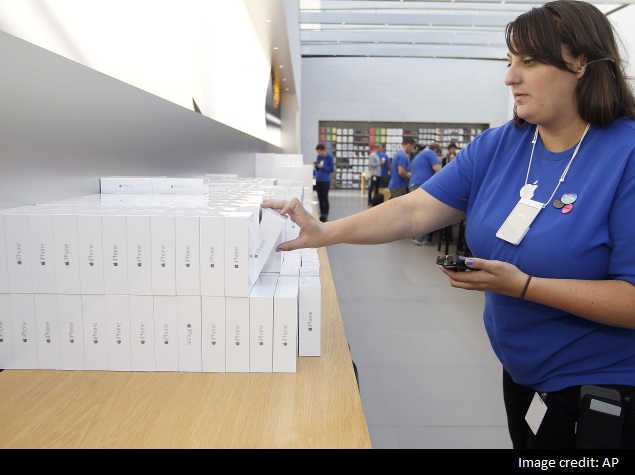
Since Sept. 19, when the iPhone 6 and its larger sibling, the iPhone 6 Plus (Review |Pictures), went on sale, consumers have been ordering the gadgets faster than Applecan deliver them. The ripple effects are being felt throughout the economy, and these phones have been moving the stock market.
"The iPhone is having a measurable impact," said Michael Feroli, chief U.S. economist for JPMorgan Chase. "It's a little gadget, but it costs a lot, and it seems that everybody has one. When you do the multiplication, it's going to matter." He estimates that iPhone sales are adding one-quarter to one-third of a percentage point to the annualized growth rate of the gross domestic product.
You may not think of the iPhone as a financial powerhouse. After all, it's just a consumer good - albeit a highly functional, high-end one that you can carry in your pocket or your purse. Sales typically surge every two years when, as now, Apple does a major iPhone upgrade. You may have the warm and personal relationship with the iPhone that Timothy Cook, Apple's chief executive, described on Monday to Wall Street analysts during a conference call. Apple's next three months will be "incredibly strong," he said. And he spoke enthusiastically about the principal reason for this performance: "These iPhones are the best we have ever created, and customers absolutely love them."
Whether you love them or not, though, it's a good moment to recognize their significance as a financial force.
The iPhone's financial impact starts, of course, with Apple, which is reaping enormous profit from it. As the company disclosed in data embedded in a Securities and Exchange Commission filing Monday, Apple has been selling a broad mix of iPhone models at an average price of $603.
That's not remotely close to the "starting price of $199" that Apple advertises, as I wrote last month. The full price is embedded in service agreements that many customers in the United States reach with phone carriers. And many of those carriers are stating that full price quite openly. The real starting price for a new, basic iPhone is $649, and models with more memory and bigger screens cost much more.
This price structure is lucrative for Apple. "The cost of building a basic phone has stayed at about $200 for years," said Andrew Rassweiler, senior director for cost benchmarking services, at IHS Technology.
That estimate doesn't include many expenses, like research and marketing costs. But it's a rough guidepost, and it helps explain how, as Apple disclosed in a court filing two years ago, its profit margins for the iPhone are roughly double those for iPads, which tend to be priced more cheaply.
Toni Sacconaghi, an analyst at Sanford C. Bernstein, says the gross profit margin for the iPhone is close to 50 percent. Because the iPhone is Apple's most popular product - with more than 39 million sold in the last quarter - it accounts for a disproportionately large percentage of Apple's overall profit, somewhere between 60 and 70 percent, Sacconaghi said.
"Apple is now so big that it takes a lot to make it grow appreciably," Sacconaghi said. Apple is producing an impressive, interrelated ecosystem of products and services, including its forthcoming digital watches, its new digital payment system, its revived Mac line, refreshed iPads and new software operating systems. Even if all of its ventures succeed, none are likely in the next year or two to rival the financial impact of the iPhone. "The iPhone is the core of Apple right now," he said.
In a sense, the iPhone is the core of the stock market, as well. Apple is the biggest company, by market capitalization, in the world. Apple accounts for about 3.5 percent of the weighting of the Standard & Poor's 500-stock index. And, through Thursday, because its stock has performed magnificently while the overall market has not, Apple accounted for 18 percent of the entire rise of the Standard & Poor's 500 index this year, according to calculations by Paul Hickey, co-founder of the Bespoke Investment Group. And the engine driving Apple shares is the iPhone.
"The market is obviously counting on another strong sales performance for the new iPhone," he said. So far, it's getting that performance. And, he said, Apple's invigorating effect is likely to continue.
Because the iPhone is made mainly overseas and sold worldwide, it is stimulating the economy in other regions, particular in East Asia, Feroli observed, and it keeps a substantial amount of its cash abroad. Such factors make it harder to assess the company's impact domestically.
"It's not like GM having a great quarter," Feroli said. "It doesn't translate directly into employment in the United States. It's a more complex world today, and, in that sense, Apple is representative of that world."
Apple, though, is having a powerful impact in the United States. Last month, for example, electronic and consumer appliance store sales jumped 3.4 percent while clothing sales fell 1.2 percent, according to Commerce Department figures. "People are buying iPhones, partly as a status symbol," Feroli said. "They're not buying as much clothing."
Even people who don't buy iPhones and don't own Apple shares have a stake in the company. I don't own any Apple stock, for example, but I do have a stake indirectly through my 401(k) account. That's because mutual funds in my portfolio own Apple shares as their biggest holdings. Nearly every pension fund holds some stock, and these days, there's a good chance the biggest holding is Apple. And the most important financial lever at Apple is the iPhone.
All of that helps explain why Apple is such a formidable force, especially at this stage in its product cycle. And as the holiday-shopping season approaches, and iPhones keep flying off the shelves, Apple may well keep moving the world.